This is Rambert
(La)HORDE, Emma Evelein, Bobbi Jene SMith, Or Schraiber
Rambert Dance
Lowry, Salford
July 7-9, 2026; 1hr 40mins

Anyone walking into the Lowry to see this triple-bill of recent Rambert hits might see the large-screen television on the quayside for the football. As I got to the theatre this was playing - to a large, partisan crowd - the game between Argentina and Egypt.
Watching the teams was definitely modern ballet in shorts and football boots - as was the reaction, by both teams and crowd, to the scoring of the final goal.
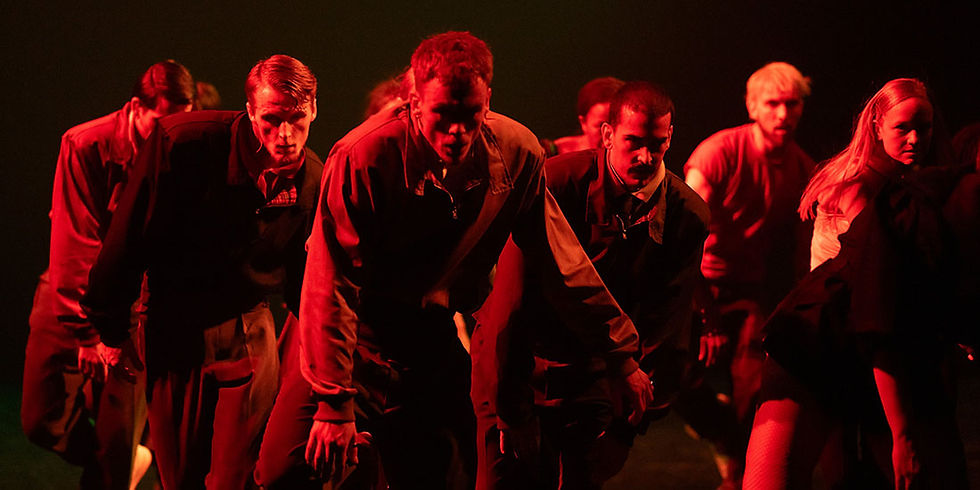
Rambert's first piece, In Crimson, choreographed by Bobbi Smith and Or Schraber, could have been taken straight from the pitch. The physical interaction, especially of the men, is visceral and striking; the actions perfectly matching the striving for perfection, both on the stage, for the audience, and on the pitch for the team. The music has a tango feel; think Piazzolla with echoes of Bizet.
The other members of the ensemble closely match the actions of the Egyptian bench; passionate and anguished. The piece rises to a wondrous climax, just like a match, where you can lose in the last two minutes before the final whistle.
The music is played largely on a piano, live. The programme notes don’t identify the player, but she is a wonderful musician. As always the ensemble is Rambert-stylish, which means the dancers are physical, intense and wonderful to watch, as pairs or in groups.
The second piece, Hop(e)Storm, choreographed by the company and partner company (La)Horde, is perfectly matched to the name: pure movement to a rave beat that has the audience shouting for more. The ability to create beautiful patterns at speed and in concert with others is one of the things that set Rambert apart. Given the energy required, the company needed the break to recover!
The final piece, Gallery of Consequences, choreographed by Emma Evelein, is a quieter, more thoughtful piece. Set in a world of travel on aeroplanes, it sets out to recreate the experience of travellers as they navigate the hell of airports. Using travel cases as props and more vocalism than usual it is quite a contrast to the earlier pieces. The only two off-notes are, firstly: a travel case is left unattended for a long period. At Manchester airport it would have been blown up before the end of the piece; and for those in the audience who have travelled with a budget airline, the idea that a person behind a desk would engage with a traveller in a meaningful way is laugh-out-loud not likely.
But the whole programme attempts to prove that Rambert is creatively alive and moving into its second century with vigour, wit and power. It succeeds.
More info and ticket here