


Teechers

John Godber
The John Godber Company
Theatr Clwyd
March 24-28, 2026; 2hr 30mins
(also at Victoria Wood Theatre, Windermere, April 2-4; Barnsley Civic, April 17-18; Hull Truck, April 21-30; Bolton Octagon, May 5-16; St George's Hall Bradford, May 21,22; Harrogate Theatre, May 27-30)
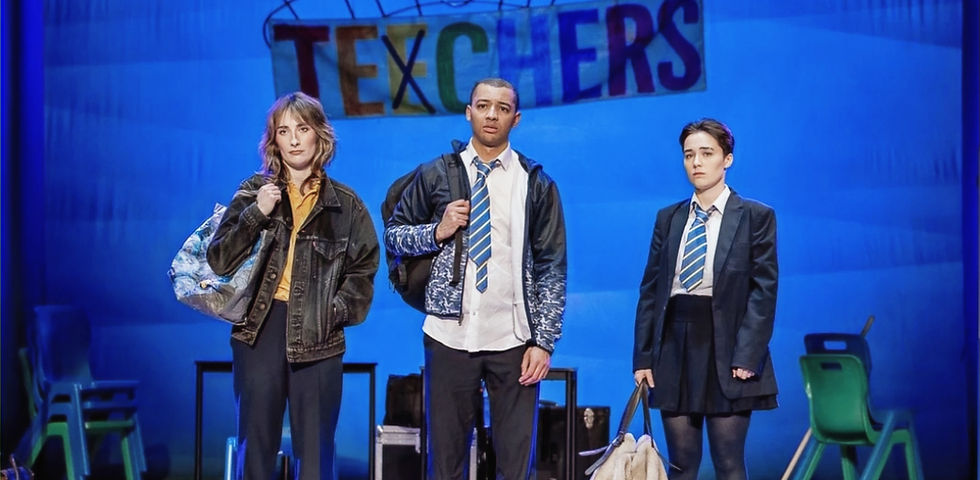

To what extent is Teechers an accurate representation of education in a working class school? Playwright John Godber admits he is no education specialist - but he was once a teacher, and writes what he sees. Education has changed in the UK, he believes, even since Covid; which might be depressing to some and perhaps inspirational to others.
This post-Covid, updated version of the 1980s original comedy is set in an average northern comprehensive, the fictional Whitewall in Hull. It picks up the attitudes of several disaffected teenagers as they near the end of their school career, where in many lessons, "we are like robots". A new drama teacher fights against the low status of the subject and inspires these pupils to use their imagination and creativity to come up with their own drama, and so the show becomes a play within a play. When this teacher leaves at the end of the year, the pupils recognise the influence she has had on them.
The cast of three - Jo Patmore, Levi Payne and Sophie Suddaby - play 20 roles between them, sometimes passing a character from one to another. The set is minimalist - just three tables, some chairs, lockers and a few props - so the focus is very much on character interaction.
The trio communicates the play in excellent fashion, moving the action at a pace and changing roles seamlessly. Suddaby plays Miss Nixon, suitably feisty and downtrodden, while the main roles of the other two are as students with attitude, a touch of arrogance and a lot of insecurity.
This play picks up on the sense of hopelessness many teenagers feel, coming from a school that "needs improvement" in a socially-deprived area. It also illustrates the pressures on teaching staff, not only with pupil indiscipline but from excessive workload and a target-driven environment that seems to squeeze the joy out of learning and turns schools into exam factories. Despite the original script nearing its 40th anniversary, the play has been updated accurately - and offers pointers to the reason why over a quarter of newly-qualified teachers leave within the first three years of their career.
The show has a definite political message - that there is a class difference in society, fuelled and emphasised in education, especially in the difference between the state and private sectors. This is very much true to life: a young adult is much more likely to have a successful career if he or she had a private education. The divide is greater now than when the play was first produced in 1987.
While Teechers sometimes paints a dismal picture of education, it also illustrates the major reason why many teachers stay in a poorly-paid, stressful profession that doesn't get the same recognition as medicine or law. The classroom can be fun (as indeed can be this often admirably-funny comedy), and it can be thrilling to be in the company of up to 30 teenagers, give them something meaningful to learn and see them develop into more mature young adults.
The play gives the audience much to reflect on - confirmed by the well-deserved standing ovation.
More info and tickets here


